
AI SEO GEO Services
Search is changing. People no longer rely only on traditional Google results to find information, compare services and choose businesses. They also use Google AI Overviews, ChatGPT, Gemini and Perplexity to get answers.
Your website needs to be useful for both traditional search and these new search experiences.
At Gulf Digital Core, we provide AI SEO services that help businesses improve their visibility across search engines and AI-powered platforms. We work on website content, technical SEO, semantic entities, brand information and online authority.
Our approach combines traditional SEO with Generative Engine Optimization (GEO) and Answer Engine Optimization (AEO). The goal is to make your website easier to find, understand and use as a reliable source of information.
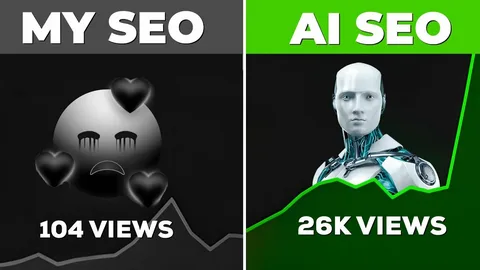
What Is AI SEO and How Does It Work?
AI SEO is the process of improving a website so it can perform well in search engines and AI-powered search experiences.
It uses core SEO practices along with content and technical improvements that help search systems understand your website. These include clear information, relevant topics, strong internal links, accurate business details and useful content.
AI SEO is not just about using AI tools to write articles. It also involves understanding what people search for, how search systems discover information and which sources they may use when generating answers.
How AI Is Changing Search Behaviour
People often ask complete questions instead of typing short keywords. They may ask an AI assistant to compare products, explain a service or suggest a business.
This changes how businesses need to present information online.
A page that only repeats keywords may not answer these questions well. A useful page should explain the topic, address common concerns and provide information that readers can trust.
AI SEO vs Traditional SEO
Traditional SEO focuses on improving a website’s visibility in search engine results. AI SEO builds on those same foundations while also considering AI-powered search and answer experiences.
Traditional SEOAI SEOTargets organic search resultsConsiders search results and AI answersFocuses on keywords and search intentAdds questions, entities and topic relationshipsImproves pages and site structureAlso checks how clearly AI systems can understand informationTracks rankings and organic trafficAlso reviews AI mentions, citations and referral visitsBuilds search authoritySupports clear and consistent brand information
Traditional SEO remains important. AI search does not remove the need for useful content, technical access or website authority.
How AI Search Systems Find and Use Information
Different AI platforms use different systems to find and present information.
Some AI search experiences use web search results. Others may use a mix of search indexes, retrieved sources and model knowledge. Their methods and source selection can change.
This is why AI SEO should not rely on one trick. Your website needs clear content, sound technical SEO and accurate information that supports your business expertise.
AI SEO vs GEO vs AEO: What Is the Difference?
AI SEO, GEO and AEO are closely related, but they do not mean exactly the same thing.
Understanding the difference helps you choose the right improvements for your website.
What Is Answer Engine Optimization (AEO)?
Answer Engine Optimization (AEO) focuses on making content useful for systems that provide direct answers to questions.
It helps your website explain topics in a clear and direct way.
AEO work may include:
Answering common customer questions.
Adding clear definitions and explanations.
Using helpful headings and page sections.
Improving FAQ content where it serves a real purpose.
Providing accurate and easy-to-understand information.
The aim is to make your content useful when people look for direct answers.
What Is Generative Engine Optimization (GEO)?
Generative Engine Optimization (GEO) focuses on improving how a brand and its content may appear in AI-generated answers.
These answers can come from platforms such as ChatGPT, Gemini and Perplexity.
GEO work may involve:
Improving the depth and accuracy of website content.
Making business information clear and consistent.
Building relevant brand mentions and references.
Improving topic coverage and entity relationships.
Checking whether AI systems can access important website pages.
Monitoring brand mentions and citations across selected prompts.
GEO does not guarantee that an AI platform will mention or cite your business. It helps improve the quality and accessibility of the information available about your brand.
How LLM Optimization Fits Into AI SEO
Large Language Models (LLMs) are AI systems that process and generate human-like text.
LLM optimization, sometimes called LLMO, is a term used for improving how a brand’s information can be understood and represented in AI systems.
It can include clear business descriptions, consistent facts, useful content, relevant references and well-organized website information.
GEO, AEO and LLM optimization overlap. They are not separate replacements for traditional SEO.
How We Improve Your Visibility in AI Search Platforms
Each platform has its own features and ways of presenting information. We do not treat every AI search platform as if it works in the same way.
Our AI SEO work considers the platforms that matter to your audience and business.
Google AI Overviews and AI Mode Optimization
Google AI Overviews provide AI-generated summaries in selected search results. Google AI Mode offers a more conversational search experience.
Both are connected to Google’s search ecosystem. Strong SEO fundamentals still matter.
We focus on:
Making important pages accessible to Google.
Improving content quality and search intent coverage.
Answering relevant questions clearly.
Supporting important claims with useful information.
Improving internal links and page structure.
Using suitable structured data where relevant.
There is no special AI Overview schema that guarantees inclusion. A website must still meet Google’s normal search and technical requirements.
ChatGPT Search Visibility
ChatGPT can use web search to find and present information in relevant responses.
We review how your website describes your business, services and expertise. We also check whether important pages are accessible and whether your content answers questions your customers may ask.
Our work may include:
Reviewing relevant customer prompts.
Improving service and product information.
Checking technical access for relevant crawlers.
Building useful topic coverage.
Reviewing brand references and external sources.
Gemini Search Visibility
Gemini is Google’s AI assistant. Its features and access to information can vary by product and setting.
We focus on clear website information, relevant content, technical SEO and a consistent business identity.
These improvements can support better understanding of your website, but they do not guarantee that Gemini will recommend your business.
Perplexity AI Visibility
Perplexity provides AI-generated answers with source references.
For this platform, useful and well-supported information matters. We review whether your content answers specific questions and whether your pages provide clear facts, explanations and relevant sources.
We also assess your brand’s presence across relevant websites and online references.
Our AI SEO Services
We offer a range of AI SEO services based on your website, industry and search goals. Each project starts with an assessment rather than a fixed list of changes.
AI SEO Audit and Opportunity Analysis
An AI SEO audit helps identify issues that may affect your website’s search visibility and accessibility.
We review:
Website crawling and indexing.
Important page content and search intent.
Existing keyword and topic coverage.
Internal links and site structure.
Brand information and entity signals.
AI crawler access.
Competitor visibility across relevant search topics.
Opportunities to improve AI search coverage.
You receive findings and a list of actions based on their importance.
GEO and AEO Content Optimization
We improve existing pages so they provide clear, useful and complete information.
This can include:
Rewriting unclear explanations.
Adding missing information.
Answering relevant customer questions.
Improving headings and page structure.
Adding relevant examples and supporting details.
Connecting related topics through internal links.
Removing repetition and unnecessary content.
The focus is on helping people understand your services while making your content easier for search systems to process.
Semantic SEO and Entity Optimization
Search systems need to understand what your website is about, which topics it covers and how those topics relate to your business.
Entity optimization helps make these relationships clearer.
For example, a website offering accounting services should clearly explain its services, business type, locations, areas of expertise and related topics.
We work on:
Business and brand information.
Relevant service entities.
Related industry topics.
Author and expertise information where appropriate.
Consistent business details across important sources.
Internal links between related pages.
This helps create a clearer picture of your business and its subject areas.
AI Crawler and Technical SEO Checks
Good content cannot help if important pages cannot be accessed or indexed.
We review the technical setup of your website to find problems that may affect search visibility.
Our checks can include:
Robots.txt rules.
XML sitemaps.
Indexing and crawl access.
Canonical tags.
JavaScript rendering.
Page status codes.
Internal linking.
Mobile usability and page performance.
Relevant AI crawler access.
We may review crawlers such as Googlebot, GPTBot and OAI-SearchBot where relevant. Their purposes are not identical, so access decisions should match your business and publishing goals.
Brand Authority and Citation Building
AI search visibility is not only about your own website. Information about your business may also appear on other relevant websites.
We review your brand’s online presence and identify useful opportunities to build trust and recognition.
This may include:
Relevant industry publications.
Genuine business listings.
Expert contributions.
Digital PR opportunities.
Relevant partner and supplier references.
Consistent business information.
Useful mentions from trusted websites.
We focus on relevant references, not bulk links or artificial mentions.
AI Search Visibility Monitoring
AI answers can change over time. A brand may appear for one question but not another.
We review selected search prompts that relate to your products, services and industry.
Monitoring may include:
Brand mentions.
Source citations.
Competitor mentions.
Relevant customer questions.
AI referral traffic where available.
Organic search performance.
Changes in website visibility.
This helps identify where your brand is gaining visibility and where more work is needed.
How We Optimize Website Content for AI Search
Content needs to serve people first. It should answer real questions and provide enough detail to help readers make decisions.
We improve existing content based on its purpose, audience and search intent.
Answer-First Content and Clear Information
A reader should not have to search through several paragraphs to find a basic answer.
We place important information where it is easy to find. We also use clear headings and short sections to explain complex topics.
For example, a page about technical SEO should explain what technical SEO means before discussing advanced crawling or indexing issues.
This makes the page easier to read and helps search systems identify its main subject.
Search Intent and Topic Coverage
A keyword alone does not tell the full story. We look at the reason behind a search.
Someone searching for an SEO agency may want to compare providers. Someone searching for an SEO audit may want to find problems with a website.
We review:
Main search intent.
Related questions.
Missing subtopics.
Competitor content gaps.
Relevant terms and entities.
User concerns before making a decision.
This helps us improve the page without adding unrelated information.
Semantic Entities and Topical Authority
Semantic SEO connects related concepts so search systems can understand the subject of a page.
For example, an article about AI SEO may naturally discuss Google AI Overviews, ChatGPT, GEO, AEO, crawling, indexing and structured data.
We use these connections only where they support the topic.
Topical authority grows when a website covers its subject in a useful and connected way. One article alone cannot establish authority across an entire industry.
Original Information and Trust Signals
AI-generated text is easy to produce. Useful and accurate information takes more work.
Your website should offer something that helps readers beyond general statements.
We look for opportunities to add:
First-hand business knowledge.
Real service details.
Clear examples.
Original research where available.
Accurate facts and references.
Author and business information.
Updated information.
We do not invent case studies, customer results or business experience to make a page appear more trustworthy.
Structured Data and Schema Markup
Structured data helps search engines understand certain information on a page.
Depending on the page, relevant Schema.org types may include:
Organization
LocalBusiness
Person
Service
Article
Product
We use schema that matches the visible content and the actual purpose of the page.
Schema can support search engine understanding, but it does not guarantee AI citations, rankings or rich results.
Technical SEO for AI Search Engines
Your website needs a sound technical setup so search engines can discover and process its important pages.
AI search also makes it useful to understand which crawlers can access your website and what information they can retrieve.
AI Crawler Access and Robots.txt
The robots.txt file gives instructions to crawlers about which parts of a website they may access.
We review these rules to identify accidental blocks affecting important pages.
Crawler access should be managed with care. Some crawlers support search discovery, while others may serve different purposes. You should decide which access to allow based on your needs.
Googlebot, GPTBot and OAI-SearchBot
These crawlers have different roles.
Googlebot: Google’s crawler for discovering and processing web pages.
GPTBot: An OpenAI crawler associated with collecting web content for model improvement.
OAI-SearchBot: An OpenAI crawler used to discover content for search features.
Allowing one crawler does not automatically allow every other crawler. We review the relevant rules and help you make informed decisions about access.
Website Crawling, Indexing and JavaScript Rendering
Search engines need to discover and process your important pages.
Problems can occur when pages are blocked, return errors, contain incorrect canonical tags or rely on content that is not rendered properly.
We check:
Crawlable page links.
Indexing status.
XML sitemap accuracy.
Canonical URLs.
Redirects and broken pages.
JavaScript-rendered content.
Important page content in the rendered HTML.
These checks support the technical health of your website.
Website Structure and Internal Linking
A clear website structure helps visitors and search engines find related information.
We connect relevant pages through useful internal links. For example, an AI SEO page may link to your technical SEO, content optimization and SEO audit services.
Links should help readers move to the next useful page. Adding links only to repeat keywords does not create a good website structure.
How We Measure AI SEO Performance
AI SEO needs clear measurement. We do not judge progress only by whether a brand appears in one AI response.
We use several signals to understand what is improving and what needs more work.
AI Brand Mentions and Citations
We check selected questions and prompts to see whether AI platforms mention your business.
Where source links are provided, we review whether your website or other relevant sources are cited.
Results may vary between prompts, platforms and dates.
Visibility Across Relevant Search Prompts
We create a set of questions based on your services, industry and target customers.
For example, an accounting firm may be monitored for questions about business tax filing, bookkeeping and financial reporting.
We compare the results over time to identify changes in brand mentions and competitor presence.
Organic Search Performance and Google Search Console
Traditional search performance remains important.
Google Search Console helps us review:
Search impressions.
Clicks.
Search queries.
Average positions.
Indexed pages.
Search appearance data where available.
We use this information to understand how people find your website through Google Search.
Referral Traffic and Business Enquiries
Where analytics data is available, we review visits from AI platforms and other referral sources.
We also look at actions that matter to your business, such as contact form submissions, calls and enquiries.
A rise in AI mentions does not always mean more customers. Business outcomes need to be measured separately.
Who Needs AI SEO Services?
AI search can affect businesses in different ways. The right approach depends on what you sell, who your customers are and how they search.
Ecommerce Businesses
Online stores need clear product and category information.
We can improve product descriptions, category pages, buying guides, product details and internal links.
The aim is to help customers find and compare products while supporting search engine understanding.
Local and Service-Based Businesses
Local businesses need accurate information about their services, locations and areas served.
We review service pages, business details, Google Business Profile information and relevant local content.
This supports traditional local SEO while improving the clarity of your business information online.
SaaS and Technology Companies
Software businesses often have complex products and technical topics.
We help organize product information, feature pages, documentation and educational content so customers can understand what the software does and who it serves.
International Businesses and B2B Brands
International companies need clear service information and content that matches different markets.
We review location targeting, language requirements, industry topics and brand information.
The strategy should reflect the needs of each target market rather than using the same content for every country.
Our AI SEO Optimization Process
Every website has different needs. We follow a clear process so the work is based on actual findings.
1. Website and AI Visibility Audit
We review your website, current SEO performance, important pages, technical setup and existing brand visibility.
2. Competitor and Search Prompt Research
We identify relevant competitors, customer questions and search topics. We also select prompts to monitor across suitable AI platforms.
3. Technical and Entity Analysis
We check crawling, indexing, page structure, business information and relevant entity signals.
4. Content and GEO Optimization
We improve existing pages, fill useful content gaps and organize information around real search intent.
5. Authority Improvement
We identify relevant opportunities for brand mentions, trusted references and industry visibility.
6. Performance Monitoring
We review organic search performance, AI mentions, citations and business enquiries where data is available.
You receive clear findings and recommended next steps rather than a list of changes without context.
FAQs
What Is AI SEO?
AI SEO is the process of improving a website for traditional search engines and AI-powered search experiences. It includes useful content, technical SEO, semantic entities, clear business information and online authority.
What Are AI SEO Services?
AI SEO services help businesses improve how their websites and brands are understood and discovered across search engines and AI platforms. Work may include AI SEO audits, GEO, AEO, content optimization and technical checks.
What Is the Difference Between SEO, AEO and GEO?
SEO focuses on improving visibility in search engines. AEO focuses on providing clear answers to questions. GEO focuses on improving the chances of a brand or its content being used or cited in AI-generated answers. These areas overlap and work best when supported by strong SEO fundamentals.
How Does Generative Engine Optimization Work?
GEO improves the quality, clarity and accessibility of information about a business. It may involve content improvements, entity optimization, technical checks and relevant brand references. It cannot guarantee that an AI platform will mention or cite a website.
How Can My Website Appear in Google AI Overviews?
Start with the basics of Google Search. Your pages should be accessible, indexable, useful and relevant to the search. Clear answers, accurate information and good technical SEO can support visibility, but Google does not guarantee inclusion in AI Overviews.
Can SEO Help My Business Appear in ChatGPT?
SEO improvements can help make your website easier to discover and understand. ChatGPT may use web search for relevant answers, but its responses depend on the query, available sources and product features. No SEO provider can guarantee a mention.
What Is LLM Optimization?
LLM optimization is a term used for improving how a brand and its information may be understood by large language models. It can involve clear business details, useful content, consistent facts and relevant external references.
Does Schema Markup Improve AI Search Visibility?
Schema markup helps search engines understand specific information on a page. It should match the visible content and follow the relevant guidelines. It does not guarantee AI citations or better rankings.
How Long Does AI SEO Take to Show Results?
There is no fixed timeline. Results depend on your website’s current condition, competition, content quality, technical issues and the changes required. We review progress over time rather than promise a specific result by a set date.
Do I Still Need Traditional SEO for AI Search?
Yes. Technical health, crawlability, useful content, relevant links and clear website structure remain important. AI SEO builds on these foundations instead of replacing them.
Improve Your Website’s Visibility Across AI Search
Your customers are finding information through more than one search experience. Your business needs clear, useful and accessible information wherever people look for answers.
We can help you review your website, improve content, strengthen technical SEO and build a clear strategy for AI search visibility.